
What is Complex Post Traumatic Stress Disorder?
Physical trauma can be as a result of an injury or something which caused an injury. Psychological trauma can be anything that causes a psychological ‘injury’, generally these are things such as; a physical or sexual assault, a road traffic accident or a natural disaster. These events are usually unexpected and highly distressing. As a result, we are left feeling overwhelmed and psychologically distressed. This psychological trauma can leave us with unwanted memories, flashbacks and nightmares, avoiding anything that reminds us of the event or feeling tense and depressed. When we experience a trauma, it is normal to respond in these ways, however, if these feelings continue for more than a few months then they may be the sign of ‘Post Traumatic Stress Disorder.’
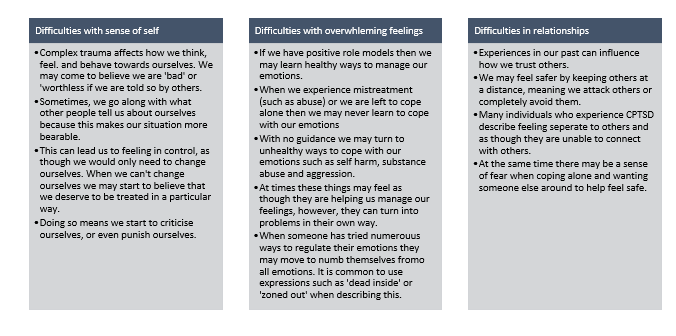
Complex trauma is identified as different because some people experience multiple traumas over long periods of time. These can include childhood physical, sexual or emotional abuse, child neglect, domestic abuse and torture. With complex trauma we may experience similar responses to those mentioned above, however, we may also experience difficulties with sense of self, controlling overwhelming emotions and, difficulties in relationships.
What causes complex trauma?
As children we need to have our basic needs taken care of, however we also have psychological needs such as the need to feel loved and accepted, safe to explore the world and meet other people, support when we get into trouble or need help and routine.
Parents and carers are supposed to meet these needs for us in early life, helping us learn how to do this in adult life. If we miss out on these we may find it difficult in later life to manage difficult situations. Adults have similar psychological needs to children and even with happy, loving childhoods, situations such domestic abuse or violence can test our psychological well being. The more trauma’s we experience the more severe our psychological problems may be; however, we can recover from these.
Dissociation is similar to the ‘numbing out’ described above. It can become a problem when it becomes an automatic response and leads us to block out the positive things in our lives as well as the negative. It can also get in the way of our day to day functioning and relationships.
The Window of Tolerance
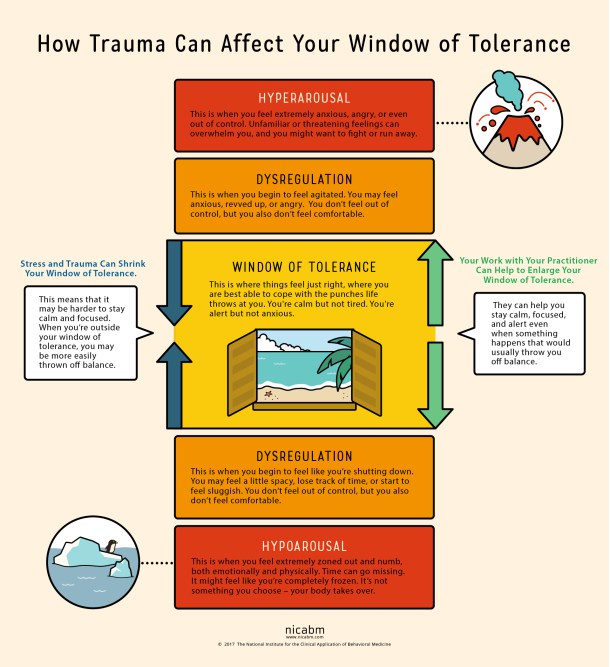
Taken from: http://www.debbieaugenthaler.com/window-of-tolerance/
A person’s window of tolerance decreases with repeated trauma and as a result there may be emotional disregulation, reduced relational abilities, reduced attention, negative beliefs about the self and increased distress.
The aim of therapy is to increase the window of tolerance and thus emotional resilience and relationships.
Download a PDF version of this resource here : What is CPTSD
 Dr Patricia Barber
I’ve recently discovered CPTSD and it has answered so many questions about my behaviour: isolation, unable to maintain long-term relationships, disassociation, self confidence, and freezing. It has also allowed me to understand my childhood and youth trauma and the influence it has had on me as an adult. Finally, some answers. Now more work.
LikeLiked by 1 person
Hi,
Thanks for your comment, I am glad you feel you have the answers to some of your questions. I hope you have support in doing the rest of your work. All the best, Patricia.
LikeLike
Thanks for your post, Patricia! I’m glad people like you are spreading the word about CPTSD. I have it as well, and my blog is about my life while dealing with it. I don’t have a therapist yet, but I’m on the waiting list for one at the local center for domestic violence healing. I also recently talked to someone with the state’s Health and Welfare Department and she knows of some free resources I can use until I can get someone from the Women and Children’s Alliance.
I believe this is disabling for me, but I have yet to really have a regular doctor and such. I have a daughter and I’m on my own dealing with this. I’m just constantly working or trying to manage myself so I can keep going on. Do you have any advice?
LikeLike
Hi there! Thanks for your comment. Unfortunately as I am not your therapist & without knowing the background/your circumstances, I am not in a position to offer you personal advice. Its sounds as though it will be a positive thing for you to have a therapist to talk with and it is unfortunate that you have to wait to see someone. In the UK we have services such as Samaritans & Breathing space, who have trained listeners to talk to at any time of day & night. If you were feeling overwhelmed between now and your appointments with your therapist it would be good to access a similar service in your area, as well as having good communication with a doctor. Wishing you all the best in your therapy.
LikeLike
Yeah I wish there were services here like that. It would have helped me get(
LikeLike
Yeah I wish there were services here like that. It probably would have helped me stay on track with this but since I haven’t had consistent support and CPTSD makes me so inconsistent, it’s all been a mess. And I can’t see a doctor because I can’t afford insurance.
We have people to talk to if you’re suicidal, but that’s pretty much it.
LikeLike