
There is a wealth of literature available suggesting that a lack of sleep can have both short and long term effects on an individuals health. Recent research from Freeman et al (2017) provides strong evidence that insomnia is a causal factor in the occurrence of psychotic experiences and other mental health problems. This research was conducted amongst a student population, however, the results of the study are relevant to the wider population.
Figure 1 highlights the impacts of one night without sleep. This includes low mood, tiredness, difficulty concentrating and difficulty coping with negative experiences throughout the day. For many people who lack a good nights sleep they may recognise these feelings and behaviours throughout the day, however, often we recognise that a good nights sleep will assist us in getting back on track.
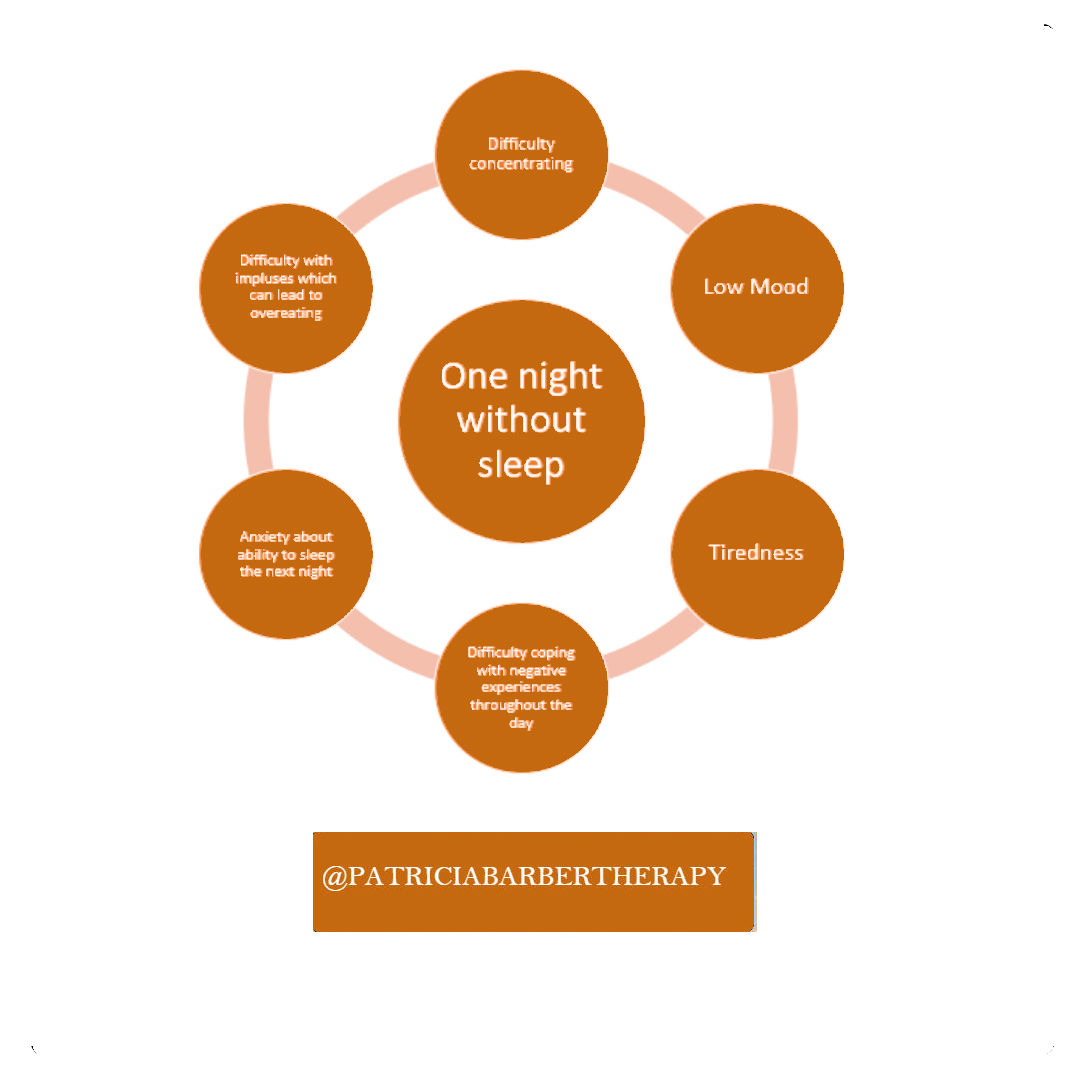
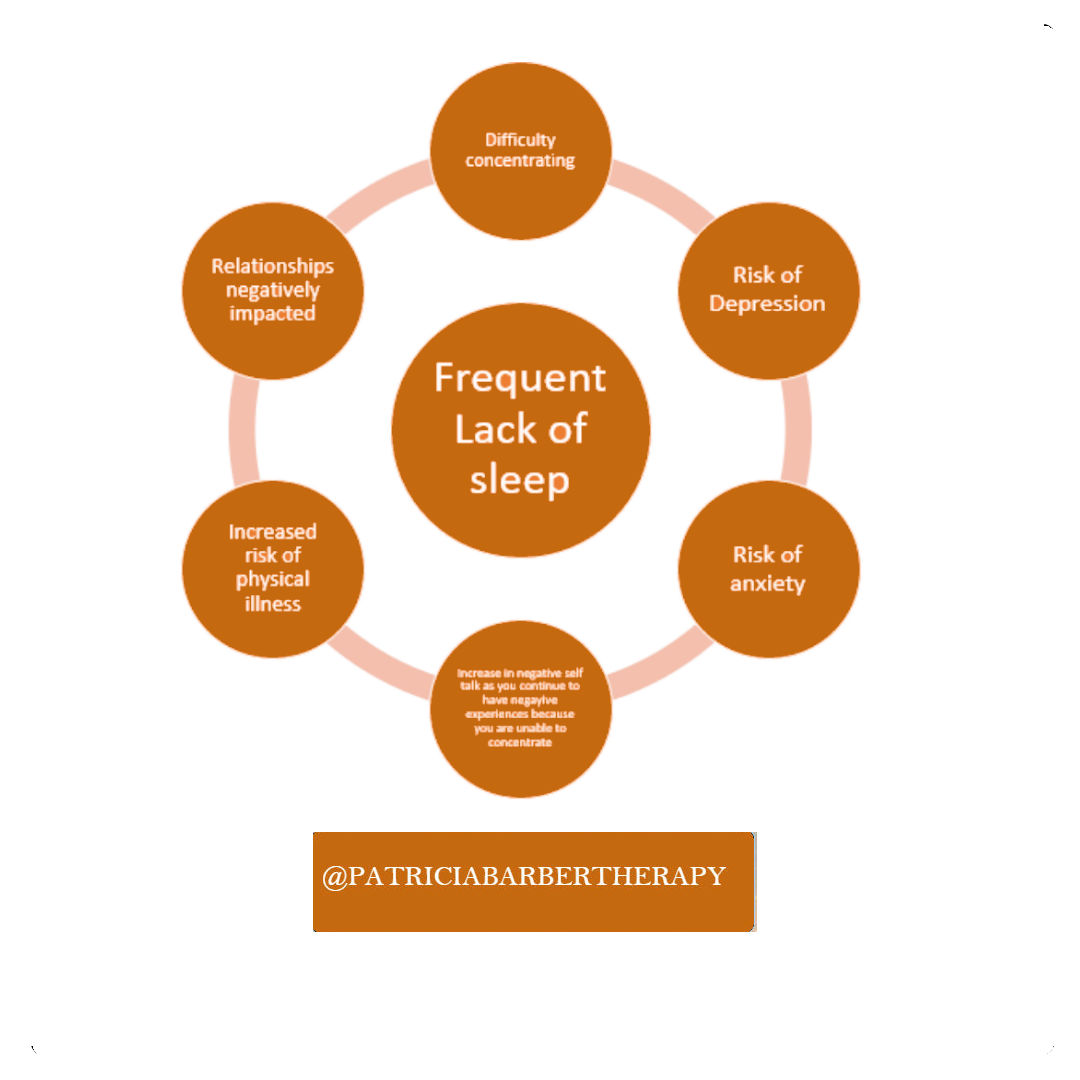
Figure 2 shows the impact of a frequent lack of sleep on our physical and mental health. This includes a higher risk of depression, anxiety and physical illness. The impact of a frequent lack of sleep would appear to permeate across all aspects of an individuals well being and for this reason sleep is an important component of working together in therapy.
If you have difficulty with your sleep, you can keep a sleep diary in order to help track your sleeping patter. Furthermore you can check out the sleep hygiene checklist in order to improve your quality of your sleep and ultimately your overall well being.
 Dr Patricia Barber